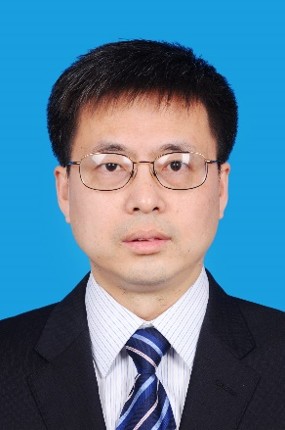
Prof. Jizhong Zhu
South China University of Technology, China
BIO: Dr. Jizhong Zhu is a National high-level talent, a Member of the European Academy of Sciences and Arts, Member of the European Academy of Engineering, Member of National Academy of Artificial Intelligence, a Foreign Corresponding Academician of the Academy of Sciences of Bologna, Italy, a Foreign Fellow of ASEAN Academy of Engineering and Technology, an IEEE Fellow, a Foreign Fellow of the China Electrotechnical Society (CSEE Fellow), an IET Fellow, and a Fellow of multiple AI associations. He is a Professor and PhD supervisor at South China University of Technology and a part-time Professor at Chongqing University. He serves as Chair of the IEEE PES Smart Buildings, Loads, and Customer Systems Technical Committee (China) and holds editorial and leadership roles in several international standards and journals. Dr. Zhu worked for over 20 years in the UK, Singapore, and the USA before returning to China in 2016 as a distinguished expert at China Southern Power Grid Research Institute. Since 2019, he has led the Integrated Smart Energy Systems Optimization team at South China University of Technology. He has published over 400 papers, holds more than 30 patents, authored several international books, and received numerousnational and internationalawards, including IEEE International Standards Contribution Awards and the China Southern Power Grid Science and Technology Progress Special Prize.
Speech Title: Application of Artificial Intelligence Technology in New Power Systems
Abstract: This report mainly presents partial application achievements of artificial intelligence technologies in the power and new energy industry. It consists of three parts: multi-scale wind-solar-load power forecasting based on deep learning networks, AI-empowered operation, scheduling, and control of new power systems, and system monitoring and secure operation oriented toward cyber-physical-social integration. The application of AI technologies in new power systems is in its infancy (or just beginning to rise). Future work will focus on a three-layer mixture-of-experts forecasting architecture based on large models to create expert clusters with autonomous evolution capabilities, establish a federated expert distillation pool for cross-scenario knowledge sharing, and realize the effective transformation of human knowledge into computable paradigms. Furthermore, by integrating multi-source heterogeneous data with deep reinforcement learning, a dynamic adaptive scheduling framework will be constructed to achieve real-time optimal decision-making and proactive risk prevention/control under multiple uncertainties. Additionally, an intelligent attack-defense system featuring cross-domain heterogeneous data fusion will be developed, along with a dynamic evolution model of attack chains, to form an integrated "detection-isolation-recovery" self-healing security operation mechanism.

Prof. Marc A. Rosen
Ontario Tech University, Canada
BIO: Dr. Marc A. Rosen is a Professor of Mechanical & Manufacturing Engineering at Ontario Tech University (formerly University of Ontario Institute of Technology) in Oshawa, Canada, where he served as founding Dean of the Faculty of Engineering and Applied Science. Dr. Rosen has served as President of the Engineering Institute of Canada and of the Canadian Society for Mechanical Engineering. He has acted in many professional capacities, including Editor-in-Chief of various journals and a Director of Oshawa Power and Utilities Corporation. With over 70 research grants and contracts and 900 technical publications, including numerous books, Dr. Rosen is an active teacher and researcher in sustainable energy, sustainability, and environmental impact. Much of his research has been carried out for industry. Dr. Rosen has other areas of expertise, including the following: exergy analysis, heat transfer, thermodynamics, integrated energy systems, modelling and simulation of energy systems, renewable energy, thermal energy storage, and phase change materials for battery cooling. Dr. Rosen has worked for such organizations as Imatra Power Company in Finland, Argonne National Laboratory near Chicago, the Institute for Hydrogen Systems near Toronto, and Ryerson University in Toronto, where he served as Chair of the Department of Mechanical, Aerospace and Industrial Engineering. Dr. Rosen has received numerous awards and honors, and he is a Fellow of the Royal Society of Canada, the Engineering Institute of Canada, the Canadian Academy of Engineering, theCanadian Society for Mechanical Engineering, the American Society of Mechanical Engineers and the International Energy Foundation.
Title: Energy sustainability: Contributions to sustainable development and sustainable transportation
Abstract: Sustainable development is an important goal for human and societal activity. Energy sustainability is of great importance to any activities and plans for overall sustainable development, and thus provides a vital route to sustainable development and environmental protection in transportation. This is particularly important given the pervasiveness of energy use throughout almost all aspects of societies and the lives of people, the importance of energy in economic development of societies and the living standards attained by people, and the significant impacts that energy processes and systems have on the environment and the ecosystems within them. Many factors that need to be considered and appropriately addressed in moving or shifting towards energy sustainability are examined in this talk. These include appropriate selection of energy resources bearing in mind sustainability criteria, facilitation of the use of sustainable energy resources particularly through the use of appropriate energy carriers, enhancement of the efficiency of energy-related processes, and a holistic adoption of environmental stewardship in energy activities. In addition, other key sustainability measures are addressed, such as economics, equity, land use, lifestyle, sociopolitical factors and population, and examples of energy sustainability measures are described in transportation.
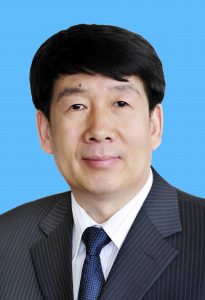
Prof. Hexu Sun
Hebei University of Science and Technology, China
BIO: A Fellow of the China Electrotechnical Society (CES), Honorary Chairman of the Hydrogen Energy Industry and Equipment Special Committee, Former President of Hebei University of Science and Technology, Ph.D. Advisor, Expert Entitled to Government Special Allowance of the State Council, Top-Tier Talent of Hebei Province, and an IEEE Senior Member. With a long-standing commitment to teaching and research in the energy sector, as well as in engineering systems and control, they have led over 50 national, provincial, and ministerial-level research projects as the Principal Investigator. To date, they have been awarded 8 provincial and ministerial-level Science and Technology Progress Awards, published 15academic monographs and over 200 high-level academic papers, and hold more than 50 authorized domestic and international invention patents.
Speech Title: Development and Challenges of The Hydrogen Energy Technology in Future Industry
Abstract: In its "15th Five-Year Plan," China has designated hydrogen energy as a future industry, marking the official upgrade of the hydrogen sector from a mere "supplementary energy option" to a "core engine for national economic growth." This presentation will provide an in-depth interpretation of this national strategic signal, revealing the future landscape and development opportunities for hydrogen energy technologies. The report will focus on four main aspects: "Development and Opportunities," "Challenges and Responses," "Technology and Innovation," and "Exploration and Practice." Ultimately, it introduces the rise of an industry alongside the opportunities and challenges of transitioning toward a green, low-carbon, and sustainable future.

Prof. Pei Zhang,
Tianjin University, China
BIO: Dr. Zhang Pei is currently a Professor at Tianjin University. He previously served as Deputy Dean of the School of New Energy at Beijing Jiaotong University, Director of Smart Grid at Accenture's Resources Division, and Director of the Power System Operations and Planning Department at the Electric Power Research Institute (EPRI) in the United States. His research focuses on power system dispatching and operation, planning, electricity markets, and power information technology. He has authored three books, published over 300 academic papers, filed 19 patents.He has led or participated in five national-level projects and over 40 industry-funded projects with State Grid Corporation and China Southern Power Grid. He has received 26 awards, including science and technology progress awards and patent awards. Recognized for his contributions to computational methods in smart control centers and probabilistic-based planning and operations, he was elected as an IEEE Fellow. For his achievements in applying artificial intelligence to power systems, he was awarded Fellow status by the Asia-Pacific Artificial Intelligence Association. In 2024, he was elected as a Foreign Fellow of the Chinese Society for Electrical Engineering. He has also been ranked among the top 2% of scientists worldwide in the "Lifetime Scientific Impact Ranking."

Lei Wang, Deputy Chief Electrical Engineer
Tsinghua University Architectural Design & Research Institute Co., Ltd., China
BIO: Lei Wang is currently employed at Architectural Design & Research Institute of Tsinghua University Co., Ltd., serving as Deputy Chief Electrical Engineer of the Institute. With over 30 years of experience in architectural electrical design, he is a Registered Electrical Engineer and Certified FIDIC Consulting Engineer.
As the discipline lead and principal designer, he has delivered numerous large-scale design projects and possesses extensive engineering design experience.
He has published multiple papers on electrical safety, lighting and electrical design in professional journals. He has participated in the compilation of several national and local standards.
He holds positions in multiple professional societies and associations, including the Interior Division of the International Commission on Illumination(CIE), the Electrical Committee of China Exploration & Design Association, the Building Electrical Committee of the Architectural Society of China, and the China Illuminating Engineering Society.
Speech Title: Intelligent Retrofitting Practice of Power Distribution System in Existing Buildings under Urban Renewal
Abstract: With the continuous advancement of urban renewal in China, the construction industry has seen a landscape where new construction and renovation are carried out in parallel. Based on renovation cases of intelligent power distribution systems, this paper analyzes the operation and maintenance disadvantages of existing conventional power distribution systems, and elaborates on the advantages of intelligent power distribution in improving power supply safety, reliability and operation & maintenance efficiency. It provides references for promoting the intelligent power distribution retrofitting of existing buildings.

Prof. Ying Han
Tianjin University, China
BIO: I have long been engaged in research on building power supply and distribution and new power systems. My research scope encompasses power system design for critical buildings including general hospitals, data centers and university campuses, intelligent distribution technologies for complex structures, multi-source power collaborative optimization, and PV-storage-DC-flex microgrids. Targeting the stringent reliability requirements of life-critical loads (ICUs, operating rooms) in healthcare facilities, I investigate key technologies such as high/low-voltage distribution architectures, emergency power configurations, medical isolated power supplies and harmonic mitigation.
For large mixed-use complexes and research buildings, I develop power distribution solutions that balance reliability, economy and low-carbon goals, enabling real-time circuit monitoring, fault localization and rapid power transfer. My work explores coordinated operation strategies for utility power, photovoltaics and energy storage, together with PV-storage-DC-flex microgrid frameworks to strengthen building power resilience and cut energy use and carbon emissions. These findings offer theoretical and technical foundations for safe, dependable, low-carbon and efficient power supply systems for mission-critical buildings.
Speech Title: Design Thinking and Practice of Intelligent Power Distribution System in Universities under Dual Objectives of Safety and Energy Efficiency
Abstract: University dormitories feature dense occupancy, large load fluctuations and rampant unauthorized additional loads, making electrical safety and energy-saving management a tough challenge. Conventional power distribution protection mainly operates after faults occur. It struggles to identify potential safety risks in advance and cannot prevent electrical fires at the source. Meanwhile, fixed power distribution strategies fail to adapt to dynamic load variations in dormitories, resulting in inadequate energy efficiency management. Combined with the design practice of university dormitory projects, this presentation starts from the inherent shortcomings of traditional distribution schemes, analyzes the unique electrical risks and load characteristics of dormitory scenarios, and elaborates the design philosophy of intelligent power distribution that balances safety bottom line and energy efficiency targets.

Chairman / Chief Engineer Weiwei Sun
Tianjin Zhongli Shendun Electronic Technology Co., Ltd., China
BIO: Weiwei Sun, a Double-High Expert in the building electrical industry of the China Exploration and Design Association, has been engaged in research in the low-voltage electrical field for more than 30 years. In the lightning protection industry, he pioneered fuse combination technology and multi-stage integration technology, and developed multiple industry-benchmark products. In the low-voltage electrical industry, he was the first to formulate a new smart electrical architecture and led a team to develop the Zhongli Smart Electrical System, which has become one of the domestically recognized technical routes for intelligent low-voltage distribution and is leading the industry’s smart development direction. He has served as chief editor of 15 standards of various types, including national standards, and participated in the compilation of 28 standards of various types, including national standards. He has completed more than 600 patented technologies.
Prof. Jizhong Zhu
South China University of Technology, China
BIO:Dr. Jizhong Zhu is a National high-level talent, a Member of the European Academy of Sciences and Arts, Member of the European Academy of Engineering, Member of National Academy of Artificial Intelligence, a Foreign Corresponding Academician of the Academy of Sciences of Bologna, Italy, a Foreign Fellow of ASEAN Academy of Engineering and Technology, an IEEE Fellow, a Foreign Fellow of the China Electrotechnical Society (CSEE Fellow), an IET Fellow, and a Fellow of multiple AI associations. He is a Professor and PhD supervisor at South China University of Technology and a part-time Professor at Chongqing University. He serves as Chair of the IEEE PES Smart Buildings, Loads, and Customer Systems Technical Committee (China) and holds editorial and leadership roles in several international standards and journals. Dr. Zhu worked for over 20 years in the UK, Singapore, and the USA before returning to China in 2016 as a distinguished expert at China Southern Power Grid Research Institute. Since 2019, he has led the Integrated Smart Energy Systems Optimization team at South China University of Technology. He has published over 400 papers, holds more than 30 patents, authored several international books, and received numerousnational and internationalawards, including IEEE International Standards Contribution Awards and the China Southern Power Grid Science and Technology Progress Special Prize.
Speech Title:Application of Artificial Intelligence Technology in New Power Systems
Abstract:This report mainly presents partial application achievements of artificial intelligence technologies in the power and new energy industry. It consists of three parts: multi-scale wind-solar-load power forecasting based on deep learning networks, AI-empowered operation, scheduling, and control of new power systems, and system monitoring and secure operation oriented toward cyber-physical-social integration. The application of AI technologies in new power systems is in its infancy (or just beginning to rise). Future work will focus on a three-layer mixture-of-experts forecasting architecture based on large models to create expert clusters with autonomous evolution capabilities, establish a federated expert distillation pool for cross-scenario knowledge sharing, and realize the effective transformation of human knowledge into computable paradigms. Furthermore, by integrating multi-source heterogeneous data with deep reinforcement learning, a dynamic adaptive scheduling framework will be constructed to achieve real-time optimal decision-making and proactive risk prevention/control under multiple uncertainties. Additionally, an intelligent attack-defense system featuring cross-domain heterogeneous data fusion will be developed, along with a dynamic evolution model of attack chains, to form an integrated "detection-isolation-recovery" self-healing security operation mechanism.
Prof. Marc A. Rosen
Ontario Tech University, Canada
BIO: Dr. Marc A. Rosen is a Professor of Mechanical & Manufacturing Engineering at Ontario Tech University (formerly University of Ontario Institute of Technology) in Oshawa, Canada, where he served as founding Dean of the Faculty of Engineering and Applied Science. Dr. Rosen has served as President of the Engineering Institute of Canada and of the Canadian Society for Mechanical Engineering. He has acted in many professional capacities, including Editor-in-Chief of various journals and a Director of Oshawa Power and Utilities Corporation. With over 70 research grants and contracts and 900 technical publications, including numerous books, Dr. Rosen is an active teacher and researcher in sustainable energy, sustainability, and environmental impact. Much of his research has been carried out for industry. Dr. Rosen has other areas of expertise, including the following: exergy analysis, heat transfer, thermodynamics, integrated energy systems, modelling and simulation of energy systems, renewable energy, thermal energy storage, and phase change materials for battery cooling. Dr. Rosen has worked for such organizations as Imatra Power Company in Finland, Argonne National Laboratory near Chicago, the Institute for Hydrogen Systems near Toronto, and Ryerson University in Toronto, where he served as Chair of the Department of Mechanical, Aerospace and Industrial Engineering. Dr. Rosen has received numerous awards and honors, and he is a Fellow of the Royal Society of Canada, the Engineering Institute of Canada, the Canadian Academy of Engineering, theCanadian Society for Mechanical Engineering, the American Society of Mechanical Engineers and the International Energy Foundation.
Title: Energy sustainability: Contributions to sustainable development and sustainable transportation
Abstract: Sustainable development is an important goal for human and societal activity. Energy sustainability is of great importance to any activities and plans for overall sustainable development, and thus provides a vital route to sustainable development and environmental protection in transportation. This is particularly important given the pervasiveness of energy use throughout almost all aspects of societies and the lives of people, the importance of energy in economic development of societies and the living standards attained by people, and the significant impacts that energy processes and systems have on the environment and the ecosystems within them. Many factors that need to be considered and appropriately addressed in moving or shifting towards energy sustainability are examined in this talk. These include appropriate selection of energy resources bearing in mind sustainability criteria, facilitation of the use of sustainable energy resources particularly through the use of appropriate energy carriers, enhancement of the efficiency of energy-related processes, and a holistic adoption of environmental stewardship in energy activities. In addition, other key sustainability measures are addressed, such as economics, equity, land use, lifestyle, sociopolitical factors and population, and examples of energy sustainability measures are described in transportation.
Prof. Hexu Sun
Hebei University of Science and Technology, China
BIO:A Fellow of the China Electrotechnical Society (CES), Honorary Chairman of the Hydrogen Energy Industry and Equipment Special Committee, Former President of Hebei University of Science and Technology, Ph.D. Advisor, Expert Entitled to Government Special Allowance of the State Council, Top-Tier Talent of Hebei Province, and an IEEE Senior Member. With a long-standing commitment to teaching and research in the energy sector, as well as in engineering systems and control, they have led over 50 national, provincial, and ministerial-level research projects as the Principal Investigator. To date, they have been awarded 8 provincial and ministerial-level Science and Technology Progress Awards, published 15academic monographs and over 200 high-level academic papers, and hold more than 50 authorized domestic and international invention patents.
Speech Title: Development and Challenges of The Hydrogen Energy Technology in Future Industry
Abstract:In its "15th Five-Year Plan," China has designated hydrogen energy as a future industry, marking the official upgrade of the hydrogen sector from a mere "supplementary energy option" to a "core engine for national economic growth." This presentation will provide an in-depth interpretation of this national strategic signal, revealing the future landscape and development opportunities for hydrogen energy technologies. The report will focus on four main aspects: "Development and Opportunities," "Challenges and Responses," "Technology and Innovation," and "Exploration and Practice." Ultimately, it introduces the rise of an industry alongside the opportunities and challenges of transitioning toward a green, low-carbon, and sustainable future.
Prof. Pei Zhang,
Tianjin University, China
BIO: Dr. Zhang Pei is currently a Professor at Tianjin University. He previously served as Deputy Dean of the School of New Energy at Beijing Jiaotong University, Director of Smart Grid at Accenture's Resources Division, and Director of the Power System Operations and Planning Department at the Electric Power Research Institute (EPRI) in the United States. His research focuses on power system dispatching and operation, planning, electricity markets, and power information technology. He has authored three books, published over 300 academic papers, filed 19 patents.He has led or participated in five national-level projects and over 40 industry-funded projects with State Grid Corporation and China Southern Power Grid. He has received 26 awards, including science and technology progress awards and patent awards. Recognized for his contributions to computational methods in smart control centers and probabilistic-based planning and operations, he was elected as an IEEE Fellow. For his achievements in applying artificial intelligence to power systems, he was awarded Fellow status by the Asia-Pacific Artificial Intelligence Association. In 2024, he was elected as a Foreign Fellow of the Chinese Society for Electrical Engineering. He has also been ranked among the top 2% of scientists worldwide in the "Lifetime Scientific Impact Ranking."
Lei Wang, Deputy Chief Electrical Engineer
Tsinghua University Architectural Design & Research Institute Co., Ltd., China
BIO: LeiWang is currently employed at Architectural Design & Research Institute of Tsinghua University Co., Ltd., serving as Deputy Chief Electrical Engineer of the Institute. With over 30 years of experience in architectural electrical design, he is a Registered Electrical Engineer and Certified FIDIC Consulting Engineer.
As the discipline lead and principal designer, he has delivered numerous large-scale design projects and possesses extensive engineering design experience.
He has published multiple papers on electrical safety, lighting and electrical design in professional journals. He has participated in the compilation of several national and local standards.
He holds positions in multiple professional societies and associations, including the Interior Division of the International Commission on Illumination(CIE), the Electrical Committee of China Exploration & Design Association, the Building Electrical Committee of the Architectural Society of China, and the China Illuminating Engineering Society.
Speech Title: Intelligent Retrofitting Practice of Power Distribution System in Existing Buildings under Urban Renewal
Abstract: With the continuous advancement of urban renewal in China, the construction industry has seen a landscape where new construction and renovation are carried out in parallel. Based on renovation cases of intelligent power distribution systems, this paper analyzes the operation and maintenance disadvantages of existing conventional power distribution systems, and elaborates on the advantages of intelligent power distribution in improving power supply safety, reliability and operation & maintenance efficiency. It provides references for promoting the intelligent power distribution retrofitting of existing buildings.
Prof. Ying Han
Tianjin University, China
BIO:I have long been engaged in research on building power supply and distribution and new power systems. My research scope encompasses power system design for critical buildings including general hospitals, data centers and university campuses, intelligent distribution technologies for complex structures, multi-source power collaborative optimization, and PV-storage-DC-flex microgrids. Targeting the stringent reliability requirements of life-critical loads (ICUs, operating rooms) in healthcare facilities, I investigate key technologies such as high/low-voltage distribution architectures, emergency power configurations, medical isolated power supplies and harmonic mitigation.
For large mixed-use complexes and research buildings, I develop power distribution solutions that balance reliability, economy and low-carbon goals, enabling real-time circuit monitoring, fault localization and rapid power transfer. My work explores coordinated operation strategies for utility power, photovoltaics and energy storage, together with PV-storage-DC-flex microgrid frameworks to strengthen building power resilience and cut energy use and carbon emissions. These findings offer theoretical and technical foundations for safe, dependable, low-carbon and efficient power supply systems for mission-critical buildings.
Speech Title: Rethinking Electrical Protection to Build a Solid Defense Line for Electrical Safety
Abstract: Electrical fires occur frequently and have become one of the most prominent safety hazards in various places. Traditional distribution protection, long widely used as a core means of electrical safety, has never been able to fundamentally curb the occurrence of electrical fires. The root cause lies in the inherent limitations of traditional distribution protection: it cannot address the core risk that causes fires—various hidden abnormal currents. This presentation will start with the principles and shortcomings of traditional distribution protection, thoroughly analyze the hazards of abnormal currents, and clarify the correct direction for electrical protection.

Prof. Xiaoming Liu
Hebei University of Technology, China
BIO: Prof. Xiaoming Liu is affiliated with Hebei University of Technology. She once served as Dean of School of Electrical Engineering, Hebei University of Technology, and Executive Director of the State Key Laboratory of Reliability and Intelligence of Electrical Equipment. Her main research interests include design and application of modern switching electrical equipment and systems, high‑voltage and insulation technology, as well as intelligent electrical apparatus and systems. She is a recipient of the Special Government Allowance from the State Council, a New‑Century Excellent Talent of the Ministry of Education, Member of the Electrical Engineering Teaching Steering Committee for Institutions of Higher Education under the Ministry of Education, Distinguished Professor of Tianjin Municipality and Distinguished Professor of Liaoning Province. Currently, she is the Chairman of Tianjin Society for Electrical Engineering, member of the Science and Technology Advisory Committee of State Grid Hebei Electric Power Co., Ltd., and member of the High‑Voltage Transmission and Distribution Equipment Committee of CIGRE National Committee of China. She has presided over and completed more than 40 research projects funded at national, provincial and enterprise‑commissioned levels, including 4 completed General Programs and 1 ongoing General Program of the National Natural Science Foundation of China. She has supervised over 100 postdoctoral researchers, doctoral and master’s students, and published more than 200 academic papers.
Speech Title: Physics‑Data Dual‑Driven Design and Applications for Reliability of AC‑DC Vacuum Switches and Systems
Abstract: Focusing on the control and protection of the power system, fundamental research, applied‑fundamental and applied research are carried out. This oral presentation covers the following contents: (1) Design and development of eco‑friendly and reliable vacuum dielectric switching apparatus for AC and DC applications, covering voltage classes including low‑voltage, medium‑voltage, as well as high‑voltage multi‑break series‑connected switching apparatus. (2) Targeting the needs of R&D in the electrical equipment, physics‑data dual‑driven design method for reliability of AC‑DC vacuum switches and systems are investigated. And the prototype design and reliability test research are accomplished.